
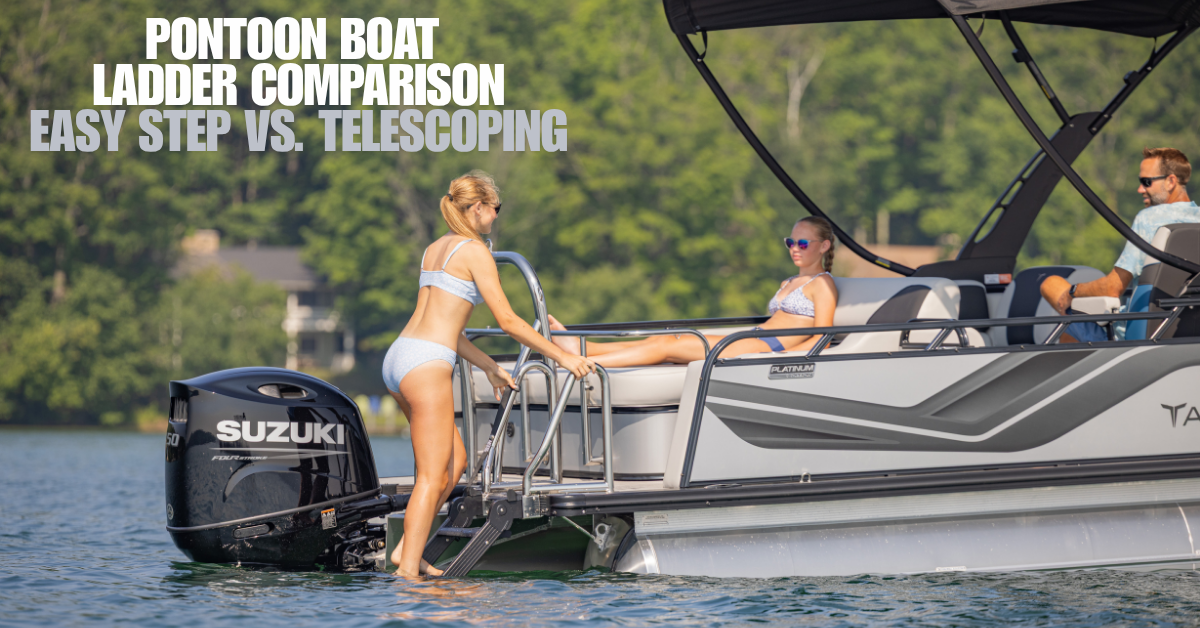
Pontoon Boat Ladder Comparison: Easy Step vs. Telescoping
Why Pontoon Owners Start Looking for a More Comfortable Ladder
Many pontoon owners begin a pontoon boat ladder comparison when their current ladder becomes uncomfortable or difficult to use. Over time, awkward climbs and limited usability—especially for dogs or older family members— often prompt boaters to explore alternative ladder solutions. Because of this, online searches like “pontoon boat dog ladder,” “best pontoon boat ladder for elderly,” and “best pontoon boat ladder” are common.
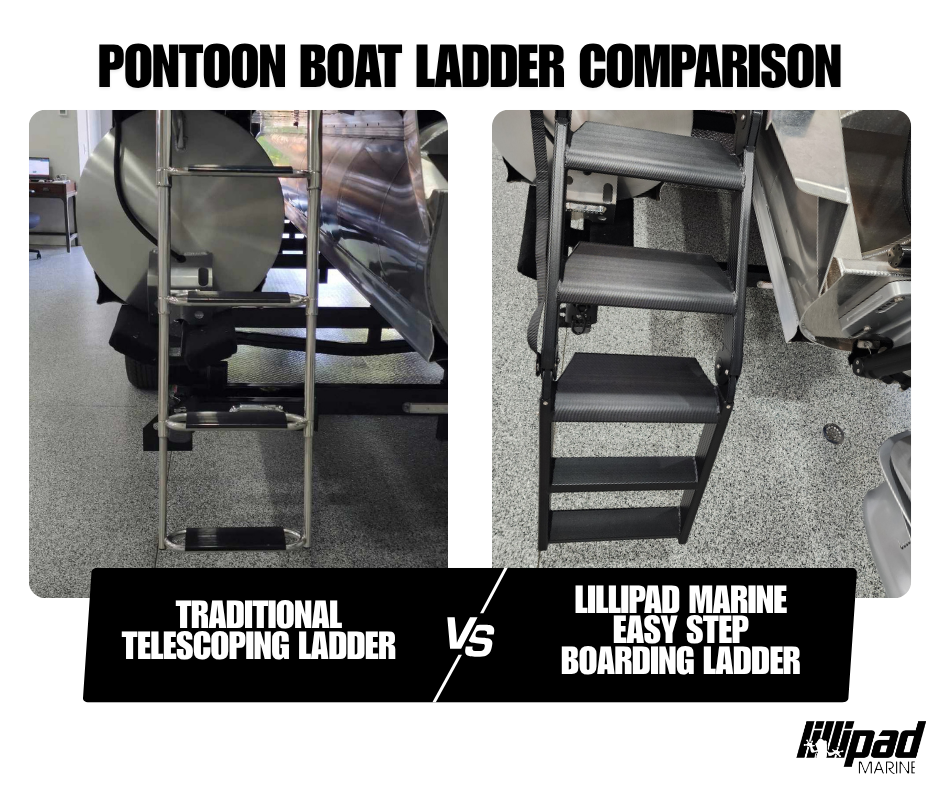
While telescoping ladders are standard on most pontoons, they rely on a vertical, rung-style design that requires upward pulling. As a result, they can be uncomfortable, challenging, or unusable altogether. The narrow rungs and steep climbing angle provide limited foot support and require more upper-body effort to reboard. This is especially true for those dealing with knee or hip discomfort, limited upper-body strength, or dogs that cannot physically navigate rung-style ladders. For this reason, pontoon owners often look for a ladder that provides a more accessible climbing experience.
A Better Pontoon Boat Ladder Design
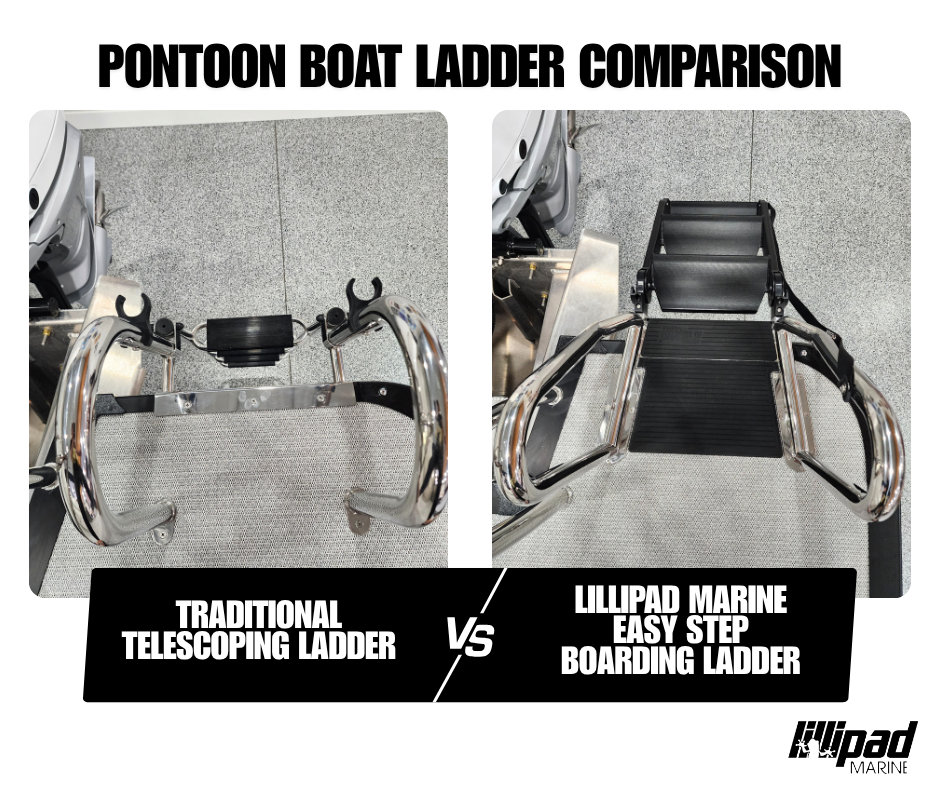
The LilliPad™ Marine Easy Step Boarding Ladder addresses these exact concerns. It features extra-deep, contoured steps with integrated traction for secure footing and a stair-step climbing angle creates a natural transition from the water. In addition, the Easy Step is dog-friendly by design, with a third step positioned just below the waterline. Because of this intentionally placed step, dogs go from swimming to climbing naturally without relying on additional equipment or assistance. The strap-assisted design allows users to deploy and retract the ladder from a standing position on the boat, eliminating the need to kneel or bend over the water. Additionally, this ladder uses premium marine-grade materials to deliver long-term durability.
Below, we take a side-by-side look at the Easy Step Boarding Ladder and traditional telescoping ladders. Specifically, this comparison highlights the features and benefits boaters prioritize when looking for a more comfortable, convenient way to board their pontoon.
Easy Step vs. Telescoping Pontoon Boat Ladder: Pros and Cons
Pros – Easy Step Boarding Ladder
- Stair-step design creates a natural climbing motion
- Extra-deep steps provide full-foot support
- Third step below the waterline allows dogs to climb naturally
- Strap-assisted deployment/retraction from a standing position on the boat
- Reduces strain on knees, hips, and upper body
- Designed for comfort, stability, and accessibility
Cons – Easy Step Boarding Ladder
- Requires upgrading from a standard ladder
- May require professional installation depending on boat setup/boat owner DIY skill level
Pros – Traditional Telescoping Ladder
- Standard on most pontoon boats
- Already installed and ready to use
Cons – Traditional Telescoping Ladder
- Vertical climb requires upper-body strength
- Narrow, round rungs create pressure on feet
- Unusable for dogs
- Requires kneeling or leaning over the water to deploy/retract
- Can spray water onto the deck when retracting
Pontoon Boat Ladders: Easy Step vs Traditional Telescoping Ladders
| What Boaters Care About | Easy Step Boarding Ladder | Traditional Telescoping Ladder |
|---|---|---|
| Comfort When Climbing | Gradual stair-step climb with extra-deep steps for a safe, stable, and natural climb | Vertical climb with narrow rungs that provide less stability and limited foot support |
| Boarding for Dogs | Dog-friendly with a third extra-deep step intentionally positioned below the waterline to ensure a natural transition from swimming to climbing | Vertical rung-style ladder that makes is physically impossible for dogs to climb |
| Boarding for Elderly or Limited Mobility | Reduced reliance on upper-body strength with a gradual stair-step ascent, integrated handrails for added balance, and secure footing that minimizes strain on knees, hips, and lower back | Vertical climb that relies heavily on upper-body strength, with narrow, round rungs and minimal support for balance, increasing strain on knees, hips and joints. |
| Ease of Deployment and Retraction | Strap-assisted deployment and retraction from a standing position on the boat, eliminating the need to kneel down or bend over the water | Requires kneeling down and leaning over the water to deploy and retract, often resulting in awkward handling |
| Step Design | Three extra-deep upper steps paired with two angled lower steps, all ergonomically shaped to support the natural contour of a human foot | Narrow, cylindrical rungs stacked vertically that provide minimal surface area and limited foot support |
| Ladder Reach & Accessibility | Extends 44 inches when deployed with five total steps, creating a deeper, more accessible starting point for a natural entry from the water | Shorter deployed length with fewer usable rungs, often sitting higher above the waterline and requiring a higher first step and upward pull to begin climbing |
| Water Drainage & Retention | Self-draining design allows water to flow freely through the ladder, preventing water from being trapped, minimizing excess water on the deck, and reducing lift weight for smoother, more controlled deployment and retraction | Tubular rung design traps water inside the ladder, adding weight and often causing it to spray or drain onto the deck during retraction |
| Durability | Constructed from premium marine-grade materials with a robust, rigid structure designed for long-term durability and consistent performance | Lightweight tubular construction that can flex under load and is more prone to wear over time |
| Weight Capacity | 400-pound weight capacity designed to support a wide range of users including dogs with stable, confident boarding | Varies by model, often with lower or unspecified weight capacities and less consistent stability |
What This Comparison Means for Pontoon Owners
A pontoon boat ladder comparison like this highlights something many boaters don’t realize until they experience it firsthand. In reality, ladder design has a direct impact on how comfortable and usable your boat is.
While traditional telescoping ladders are common, their vertical design often limits who can comfortably use them. As a result, narrow rungs and steep climbs can make reboarding more physically demanding.
In contrast, a ladder designed with a gradual, stair-step approach changes the experience entirely. Instead of pulling yourself up rung by rung, you can climb naturally. As a result, you get more stable footing and less strain on your body.
Ultimately, for many pontoon owners, this difference improves comfort, convenience, and overall accessibility
A Better Way to Board Your Pontoon
At the end of the day, the right ladder comes down to who you want to be able to use it comfortably.
A well-designed pontoon boat ladder should feel stable, natural to climb, and accessible for everyone on board. For example, it should make it easier for kids to get in and out of the water, allow dogs to climb back on independently, and give elderly passengers more confidence when boarding. Because of this, the details in ladder design play a significant role in overall comfort and usability.
By understanding these differences, shown in this pontoon boat ladder comparison, boaters can make an informed decision about what will truly improve their time on the water.
Ultimately, choosing the right ladder isn’t just an upgrade—it’s a better way to experience your time on the water. Learn more today about the Innovation Award-Winning LilliPad Marine Easy Step Boarding Ladder.